Visualizing the Invisible: 10 Engineering Brand Styles & Concept Product Photography using Gemini
At its heart, an engineering brand represents a team of people who solve complex problems using math, science, and technology. While consumer brands often sell a lifestyle or an emotion, engineering brands are built on something deeper: trust, safety, precision, and innovation. Think of your engineering brand as the visual proof of your team's expertise. Since your clients often can't physically see the complex code, structural math, or chemical bonds you create, they naturally look to your brand's visual identity to judge your precision and reliability. This guide is here to help you explore different visual concepts, compare brand styles, and see how they can be brought to life through product photography using Google Gemini.
The Core Challenge: Making the Invisible Visible
The biggest hurdle for any engineering company is that your most valuable work is usually hidden from view. Think about civil engineering—the true brilliance is often buried underground in the foundation. In software engineering, the real magic happens in the backend code that users never actually see. And in fields like aerospace or electrical engineering, you are mastering invisible forces like aerodynamics and electricity.
Because your clients can't easily see the actual work, your brand identity needs to translate those hidden skills into a visual language they can understand. If a company's typography is messy or their colors are all over the place, clients might subconsciously worry that their engineering work is just as disorganized.
The Importance of Product Design and the Single Source of Truth
When you start creating concept product photography—especially with AI tools—it can be surprisingly hard to keep your products looking consistent across different visual styles. Without a clear set of rules, AI tends to invent new shapes, materials, and sizes every time, which quickly breaks the consistency of your brand.
This is why exploring variations is both so helpful and a bit tricky. Variations let you try out new aesthetic directions or adapt to new sub-brands while keeping your core identity recognizable. But to do this safely, it helps to first create what we call a Single Source of Truth (SSOT). You can think of this as a detailed master blueprint. It sets the exact dimensions (like "240mm x 160mm"), the materials, the interface layout, and precise measurements.
If the physical product design isn't firmly anchored before you start experimenting, generating a variation will result in a completely different, hallucinated object rather than a restyled version of your actual product. By locking down the physical design first, you give yourself a stable foundation. Then, no matter how much you play with the aesthetic style in your variations, the underlying hardware remains unmistakably yours.
Methodology: Visualizing a Smart Home System
To show you just how much aesthetic choices can change how a product feels, we are going to use a single example throughout this guide: a smart home system. By applying 10 different engineering brand styles to the exact same set of devices—a central command hub, a climate sensor, a security camera, and a door lock—you'll see firsthand how visual identity transforms the product.
We used a simple two-step process to separate the physical shape of the smart home system from the brand's aesthetic:
The Physical Layer (The Blueprint): For every image, we kept the underlying mechanical shape of the smart home devices exactly the same.
The Style Layer (The Brand Overlay): Once the physical structure was locked in, we dressed it up in a specific brand style. We swapped out materials (like changing simple white plastic to heavy brushed steel), adjusted the lighting, and changed the fonts. This allowed us to completely shift the brand's mood without changing what the product actually does.
10 Engineering Brand Styles Explained
1. The Blueprint Minimalist (The "Functional" Style)
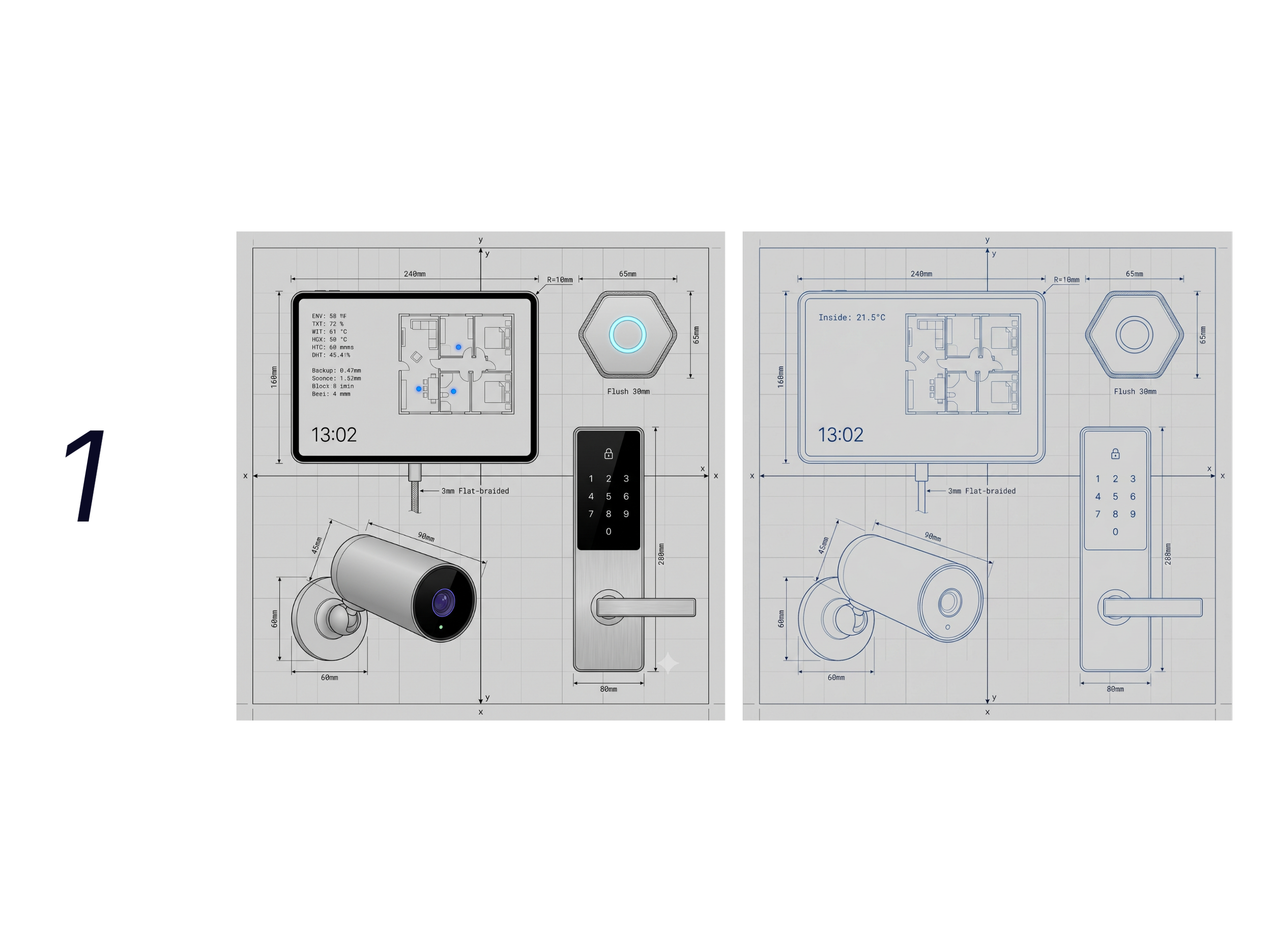
This style strips away the decorations and focuses on bare-bones, grid-based designs that remind us of technical blueprints. It quietly tells the viewer that your company values exact measurements, transparency, and practical problem-solving.
Variation Elements
To bring this variation to life, we stepped away from realistic 3D shading and used fine, single-weight vector lines instead. We placed the hardware on a precise coordinate grid, shifted the colors to a clean concrete grey with blueprint-blue accents, and used strict, typewriter-style fonts for the display.
European Real-World Examples
Buro Happold (UK): This Bath-headquartered integrated engineering consultancy is famous for its clean, grid-aligned technical layouts and precise, structurally honest designs.
Sweco (Sweden): Europe's leading architecture and engineering consultancy, which utilizes geometric, highly structured, grid-based web and document designs.
2. The Heavy Industry / Robust Bold (The "Heritage" Style)
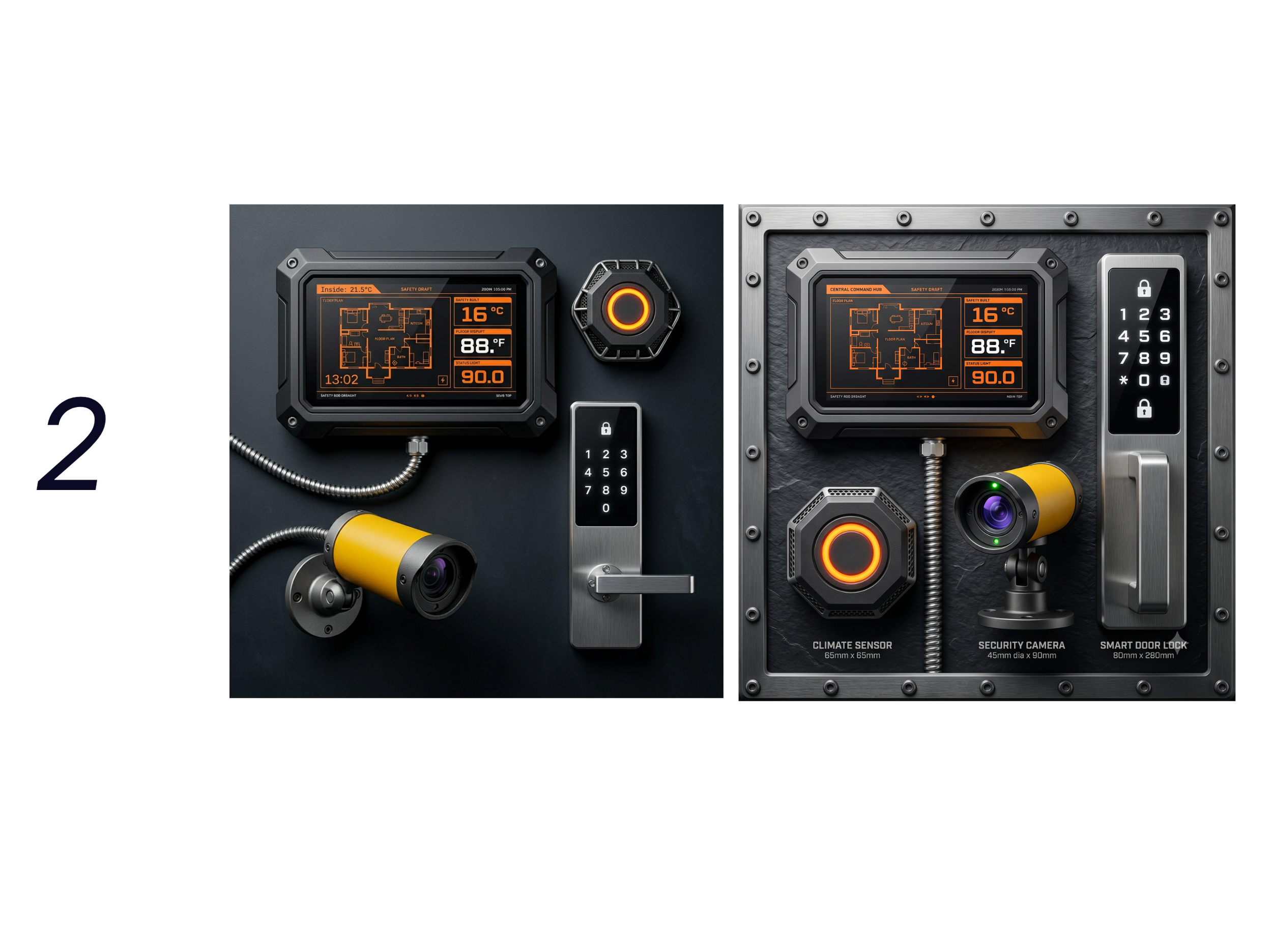
Designed to look as tough and unshakeable as a steel frame, this style uses thick, bold letters and bright warning colors like construction orange or yellow. It's a great way to reassure clients that your company is physically strong, well-established, and fully capable of handling massive, high-stakes projects safely.
Variation Elements
For this look, we traded delicate materials for heavy-duty sandblasted cast iron, brushed steel, and visible industrial rivets. We also adjusted the lighting to create dramatic, high-contrast shadows and added safety-orange highlights to really bring out a sense of structural weight and toughness.
European Real-World Examples
Hilti (Liechtenstein): This global leader in heavy construction tools is defined by its iconic, impact-resistant red cases and rugged, blocky red power tools.Their visual branding focuses heavily on physical durability and on-site grit. You can view their robust product design on the Hilti iF Design Winner Portal.
Liebherr Group (Germany/Switzerland): Famous for heavy-duty earthmoving equipment, cranes, and mining trucks. Their visual branding uses the iconic "Liebherr Yellow" and deep black accents, pairing heavy-set corporate typography with powerful, dramatic product photography. You can see this style represented on the Liebherr iF Brand Experience Showcase.
Palfinger (Austria): A premier global manufacturer of crane and hydraulic lifting systems. Their visual guidelines rely on deep limestone grey, sharp angles, and a powerful red accent line on thick structural steel structures. You can view their heavy-duty product systems on the Palfinger Brand Identity Portal.
3. The Digital Abstract / Dynamic Kinetic (The "Innovation" Style)
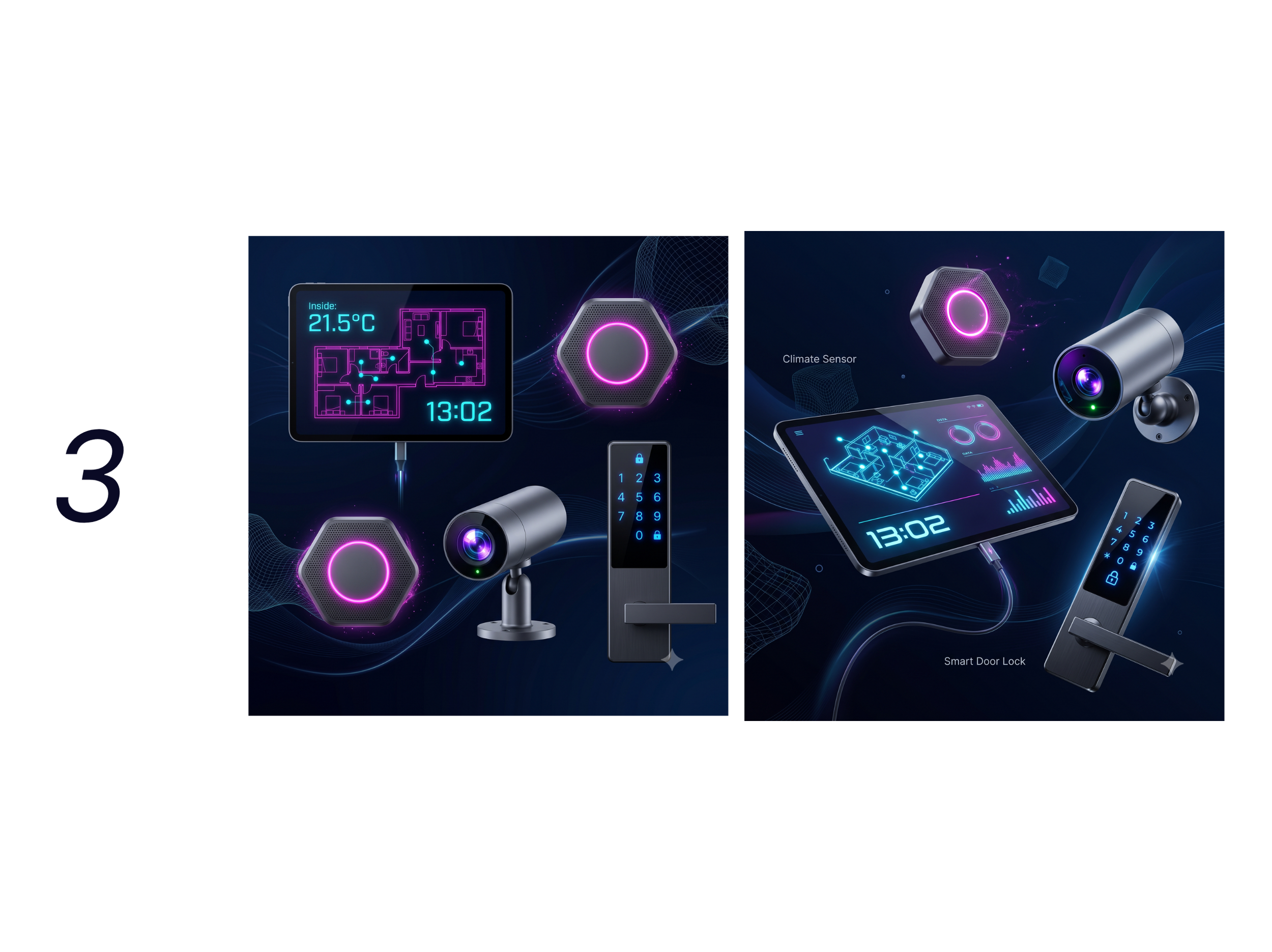
Since we can't physically touch software or data, this style uses glowing colors, 3D shapes, and sweeping lines to create a sense of digital energy. It helps make the invisible forces of technology visible, painting the company as a forward-thinking inventor.
Variation Elements
We completely changed the setting by placing the devices against a deep obsidian background filled with floating 3D meshes and soft light trails. On the screens, we added glowing neon cyan and magenta elements, using soft, volumetric lighting to make it feel like digital energy is actively flowing through the hardware.
European Real-World Examples
ASML (Netherlands): The world's sole producer of EUV lithography machines; they use high-contrast dark blue layouts paired with abstract, flowing microchip-inspired designs.
Infineon Technologies (Germany): A semiconductor manufacturer whose branding features flowing digital signals, dynamic wireframes, and high-tech energy motifs.
Graphcore (UK): An AI chipmaker using vibrant, digital-first gradients and abstract 3D wireframe models to represent multi-dimensional processing power.
4. The Eco-Tech / Sustainable Bio-system (The "Green-Tech" Style)

This style beautifully blends hard technology with the natural world. By using earthy tones like leaf-green and slate-gray, along with soft, organic shapes, it sends a comforting message that your advanced engineering is designed to protect and coexist with our environment.
Variation Elements
To create this earthy feel, we replaced cold industrial metals with lightweight, recycled aluminum and soft-touch white bio-plastics. We also softened the lighting by simulating warm natural sunlight with delicate leaf shadows, and we colored the interfaces with gentle forest greens and warm grays.
European Real-World Examples
Vestas (Denmark): A wind energy leader that coordinates soft blues, crisp whites, and gentle curves to visually capture clean air and motion.
Siemens Gamesa (Spain/Germany): Focuses on wind turbine engineering with clean, earth-toned visuals and eco-friendly structural design.
Ørsted (Denmark): A green energy provider using clean, minimalist typography, spacious layout structures, and soft natural imagery to soften hard engineering.
5. The Humanist Organic (Biomedical & Genetic Engineering)
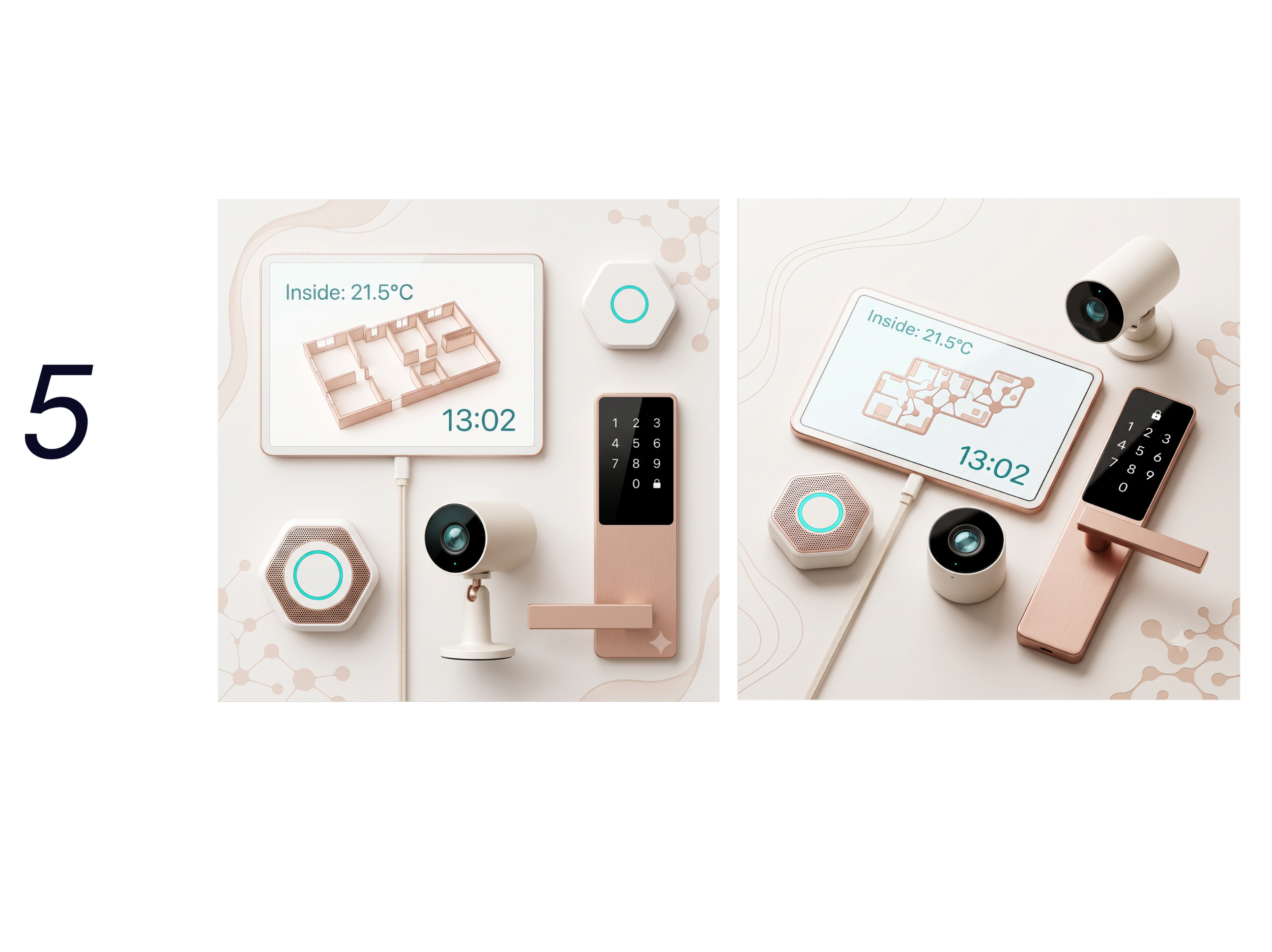
Medical technology can sometimes feel a bit cold or intimidating, so this style intentionally softens things up with warm colors, gentle curves, and friendly fonts. It bridges the gap between complex science and human care, making the brand feel empathetic, safe, and focused on well-being.
Variation Elements
We gave the casing a more personal touch by introducing rose-gold aluminum and medical-grade plastics on a clean, bright white surface. On the digital displays, we used softly rounded, approachable fonts and calming teal colors to create an atmosphere that feels both highly sterile and deeply caring.
European Real-World Examples
Philips Healthcare (Netherlands): A healthcare technology pioneer that matches clinical white and gold palettes with soft, human-centric photography and rounded shapes.
BioNTech (Germany): A biotechnology company whose brand language relies on soft, biological curves and highly readable, humanist typography.
Novo Nordisk (Denmark): A healthcare giant using soft, approachable blue palettes and rounded, non-threatening corporate geometries.
6. The Dark UI / Monospace Developer (Software & Systems Engineering)
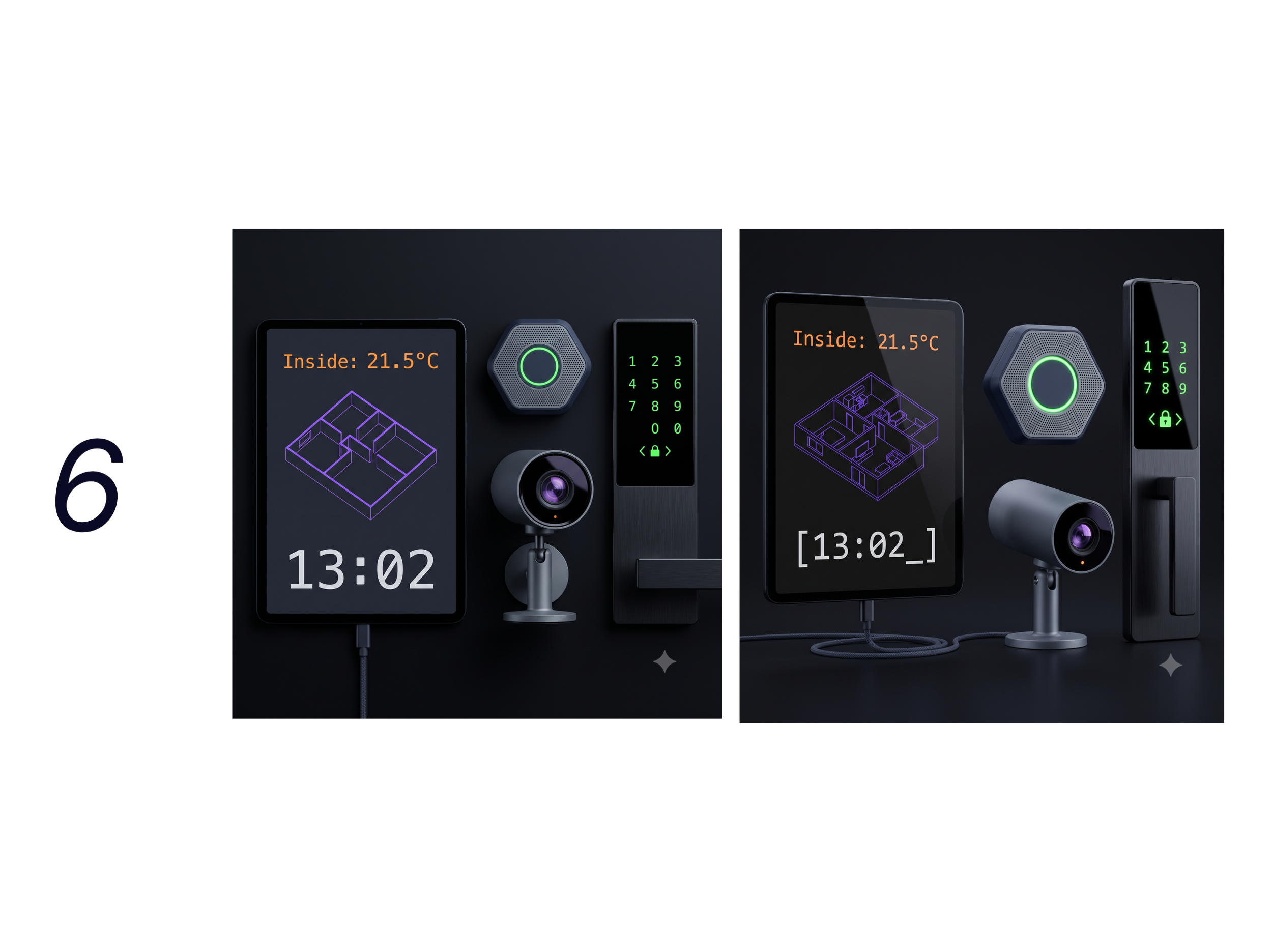
This style is inspired by the dark screens and specialized fonts that programmers look at every day. By leaning into this "coding terminal" look, you instantly signal to other software experts that you speak their language and deeply understand their world.
Variation Elements
We turned the scene into a true coding environment by using matte black surfaces and a strict "dark mode" look. We changed all the text to use strict coding fonts and highlighted the interface with the same neon green, terminal orange, and electric purple colors you’d see in a developer's code editor.
European Real-World Examples
Snyk (UK): A cybersecurity firm utilizing deep charcoal interfaces accented by terminal-style greens and monospace fonts designed for developers.
Adyen (Netherlands): A payment platform utilizing dark mode developer resources, clean monospace code blocks, and system-level visual documentation.
Elastic (Netherlands): Famous for their search-engine databases, using obsidian backdrops, code brackets, and neon syntax-highlighted diagrams.
7. The Aerodynamic Streamline (Aerospace & Fluid Dynamics)
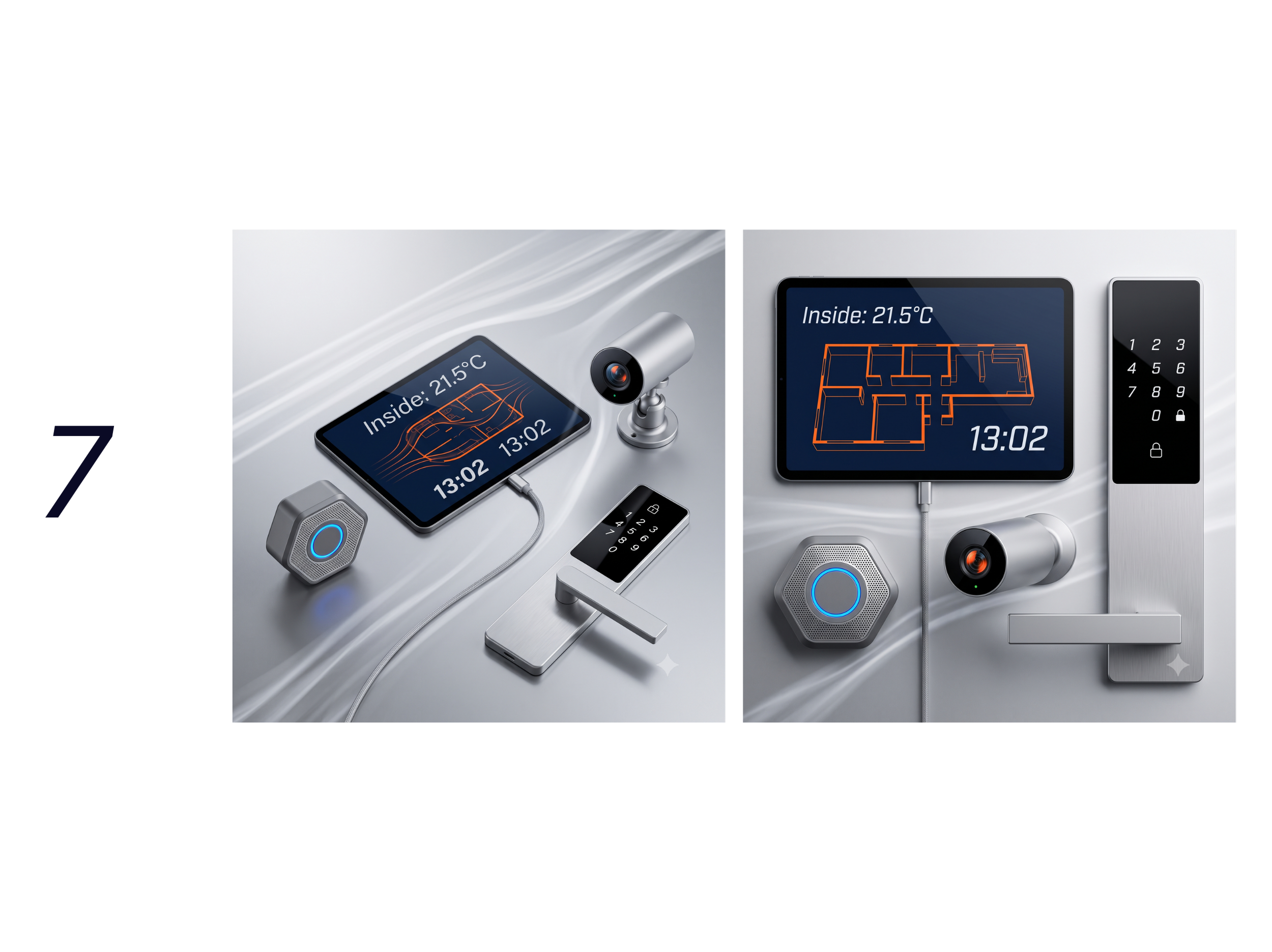
Everything here is designed to look fast, sleek, and totally free of friction. Using slanted letters and sweeping curves, this style visually represents a jet or rocket cutting through the sky, perfectly capturing the physics of speed and flight.
Variation Elements
To give a sense of velocity, we changed the fonts to wide, forward-slanting italics. We also upgraded the materials to sleek titanium and sterling silver, and added sweeping light reflections across the surface to mimic the look of smoke trailing in a high-speed wind tunnel.
European Real-World Examples
Airbus (France/Germany): The aerospace leader, employing forward-leaning italicized fonts, sleek curves, and stratosphere-blue colors to evoke advanced flight.
Rolls-Royce Aerospace (UK): Combines clean, high-performance silver metals with dynamic, sweeping curves indicating air intake and thrust.
8. The High-Voltage Grid (Electrical & Power Systems Engineering)
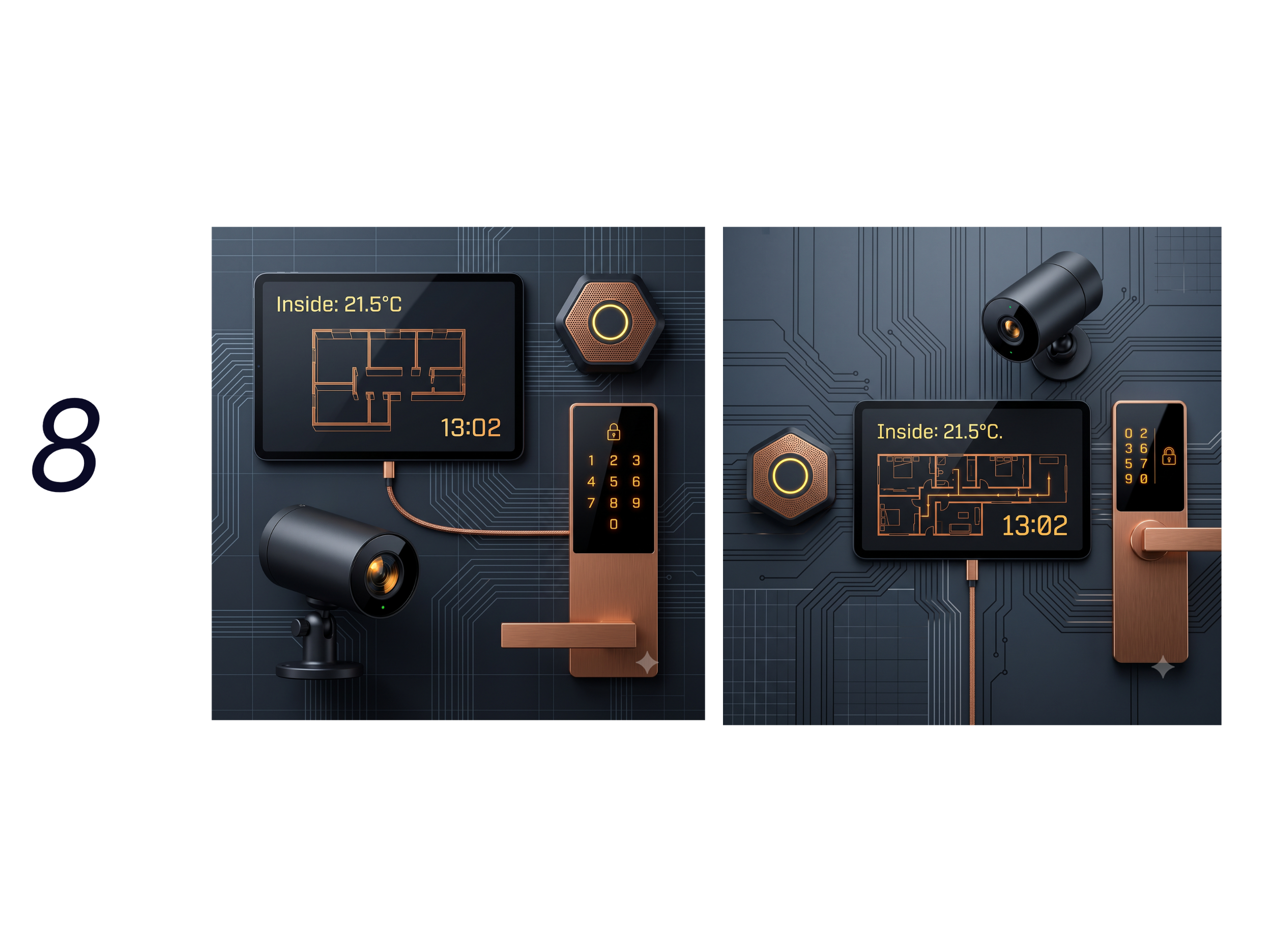
This style brings raw electrical power to life using bright, glowing colors—like lightning yellow or copper orange—set against dark backgrounds. It confidently shows clients that your team knows how to safely control and distribute massive amounts of energy.
Variation Elements
We placed the devices in an environment featuring sharp, glowing circuit board patterns and grid lines. The materials were updated to include brushed copper-steel and copper wiring, and we styled the screen text with sharp, angular fonts that remind you of electrical pathways.
European Real-World Examples
Schneider Electric (France): Features a glowing green brand mark reminiscent of switchboards and conductive, grid-like paths.
ABB (Switzerland): Known for heavy-duty power grids, utilizing high-contrast, structural red and white elements that mirror electrical schematics.
9. The Molecular Lattice (Chemical & Materials Science Engineering)
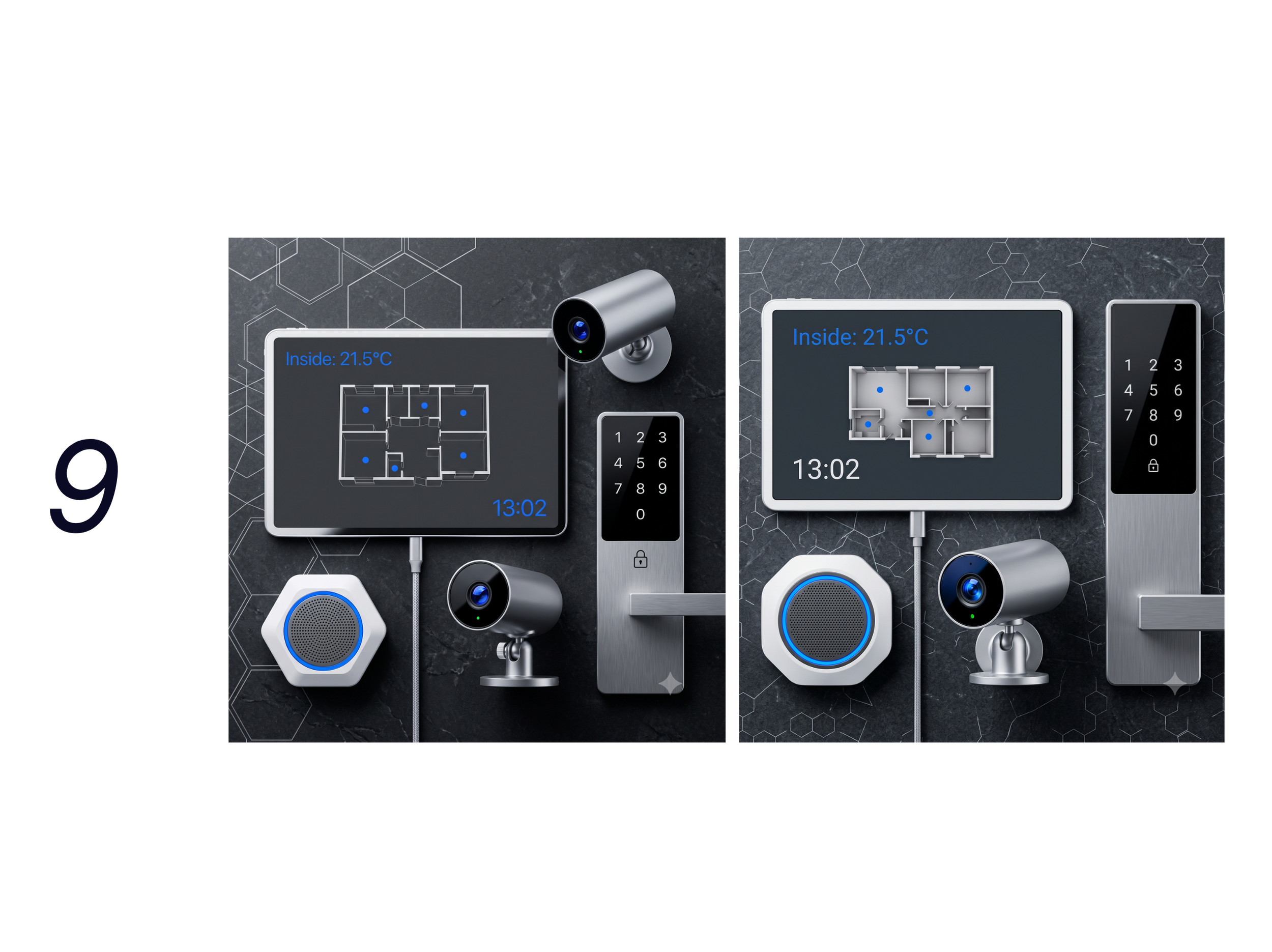
Focusing on the invisible, microscopic world, this style uses repeating shapes like hexagons to represent chemical bonds and crystal structures. It gently reminds your audience that your company engineers solutions right down to the atomic level.
Variation Elements
To get this materials-science look, we set the devices on mineral-grey stone etched with white hexagonal patterns. We swapped standard metals for finishes that look like liquid mercury, and we used perfectly balanced, widely spaced fonts to reflect the precision of molecules.
European Real-World Examples
BASF (Germany): The chemical giant whose logo consists of two interlocking square elements representing molecular bonds.
Solvay (Belgium): A materials and chemical company that uses sharp hexagonal structures, balanced geometric layouts, and clean white space.
Clariant (Switzerland): Employs crystalline lattices, bold mineral tones, and clean molecular geometries throughout its corporate design.
10. The High-Contrast Safety (Marine & Heavy Construction Engineering)
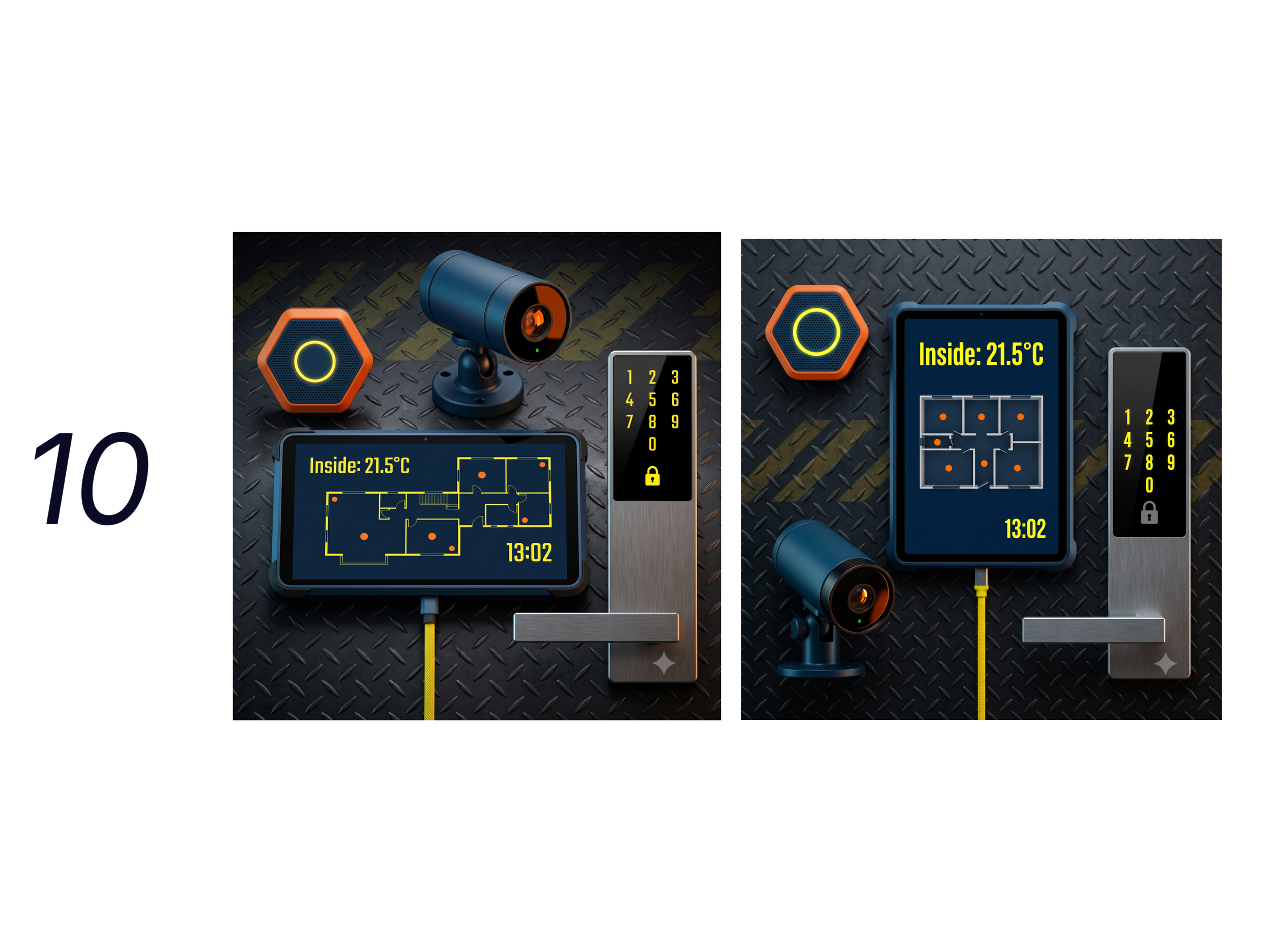
Designed to be easily readable through heavy rain or across a busy construction yard, this style relies on extreme color contrasts—like black text on bright yellow. It proves that your company puts rugged durability, high visibility, and worker safety above everything else.
Variation Elements
We set the scene by placing the hardware on a dark, rugged steel diamond-plate floor with subtle hazard stripes. We updated the colors to feature deep maritime navy alongside bright safety yellow and hazard orange, and we used heavy, condensed stencil fonts for all the screen text.
European Real-World Examples
Maersk (Denmark): Uses a high-visibility, stark sky-blue and a large, high-contrast white star optimized to stand out clearly on ocean vessels from miles away.
Deme Group (Belgium): A marine engineering leader utilizing high-contrast safety green, warning orange, and high-legibility bold typography for harsh offshore settings.
10 Key Takeaways for Building Your Engineering Brand Imagery
To wrap up everything we've explored, here are 10 straightforward lessons to keep in mind when shaping your brand's visual identity:
Visuals Prove Invisible Skills: Your brand exists to make your hidden expertise visible. Great design tells your clients that your math, code, and engineering are flawless before they even see the work.
Consistency Builds Trust: In engineering, visual consistency is tied directly to technical precision. A sloppy brochure or an inconsistent logo makes people worry about the quality of your actual products.
Lock Down Your Blueprint First: Before exploring new styles, define your "Single Source of Truth" (SSOT). Knowing the exact physical boundaries of your product keeps your brand anchored.
Variations Are a Superpower: Don't be afraid to create variations. Adjusting your aesthetic allows you to speak directly to specific niches—like shifting from a heavy-industry look to an eco-tech feel—without losing your core identity.
Materials Change the Message: Swapping textures completely rewrites the emotional weight of a product. Brushed steel feels strong and permanent, while soft bio-plastics feel approachable and sustainable.
Fonts Speak Their Own Language: Typography does heavy lifting. Monospace fonts scream "developer," while heavy, condensed stencils shout "industrial safety." Pick the font that speaks your industry's native language.
Lighting Sets the Mood: Harsh, high-contrast studio shadows communicate rugged strength. Soft, natural sunlight implies sustainability and environmental care.
Colors Communicate Instantly: Before anyone reads a word, color sets the stage. Hazard orange immediately signals safety and scale, while calming teal brings a sense of human care and biological health.
AI Needs Strict Boundaries: When using AI tools to visualize your concepts, give it strict rules (like requesting flat, orthographic views). This stops the AI from breaking the mechanical reality of your hardware.
Borrow from Your Actual Tools: The best engineering brands don't chase fleeting design trends. Instead, they borrow visual ideas from the tools they use every day—like blueprints, code editors, and wind tunnels—keeping the brand authentic and grounded in reality.
At the end of the day, an engineering brand needs to do more than just look professional. It should visually share your invisible expertise, your exact precision, and your company's core values. As we've seen with our smart home system, the simple aesthetic choices you make—from fonts to materials and colors—can completely change how people perceive your technical skills.
When we look at real-world European engineering giants, it's clear that the best brands don't leave their visuals to chance. Whether you want the raw transparency of the Blueprint Minimalist style or the rugged trustworthiness of High-Contrast Safety, consistency is your best friend. By taking the time to establish a strict master blueprint for your physical products, and then thoughtfully applying your brand's unique visual style over it, you can explore endless variations while still building a powerful, unified identity that your clients can trust.